Training for the Critical Moment: NYP and IMH Transform Code Blue Readiness
NYP's School of Design & Media partnered with the Institute of Mental Health to explore a new way of preparing healthcare teams for cardiac emergencies.
Nanyang Polytechnic’s (NYP) School of Design & Media partnered with the Institute of Mental Health (IMH) to explore a new way of preparing healthcare teams for cardiac emergencies.
Together, they developed a multiplayer Virtual Reality (VR) simulator where doctors and nurses can practise their roles as a team in a realistic virtual setting.
The Business Challenge
Conventional emergency response training relies on medical mannequins, equipment such as defibrillators, dedicated spaces and facilitators, which takes time and resources, limiting opportunities for regular practice.
It can also be difficult for facilitators to observe every action made by several participants at once and revisit these moments after the exercise.
IMH wanted to explore how VR could complement existing training by providing healthcare professionals with another way to practise together and review their performance.
The Solution
The simulator places up to four nurses and two doctors in the same virtual emergency scenario, where they work together to resuscitate a virtual patient.
To make each session useful for both practice and review, NYP developed features that allow the system to track participants’ actions, provide feedback and replay the scenario afterwards. Facilitators can review the exercise from different viewpoints, helping teams identify what went well and where they can improve.
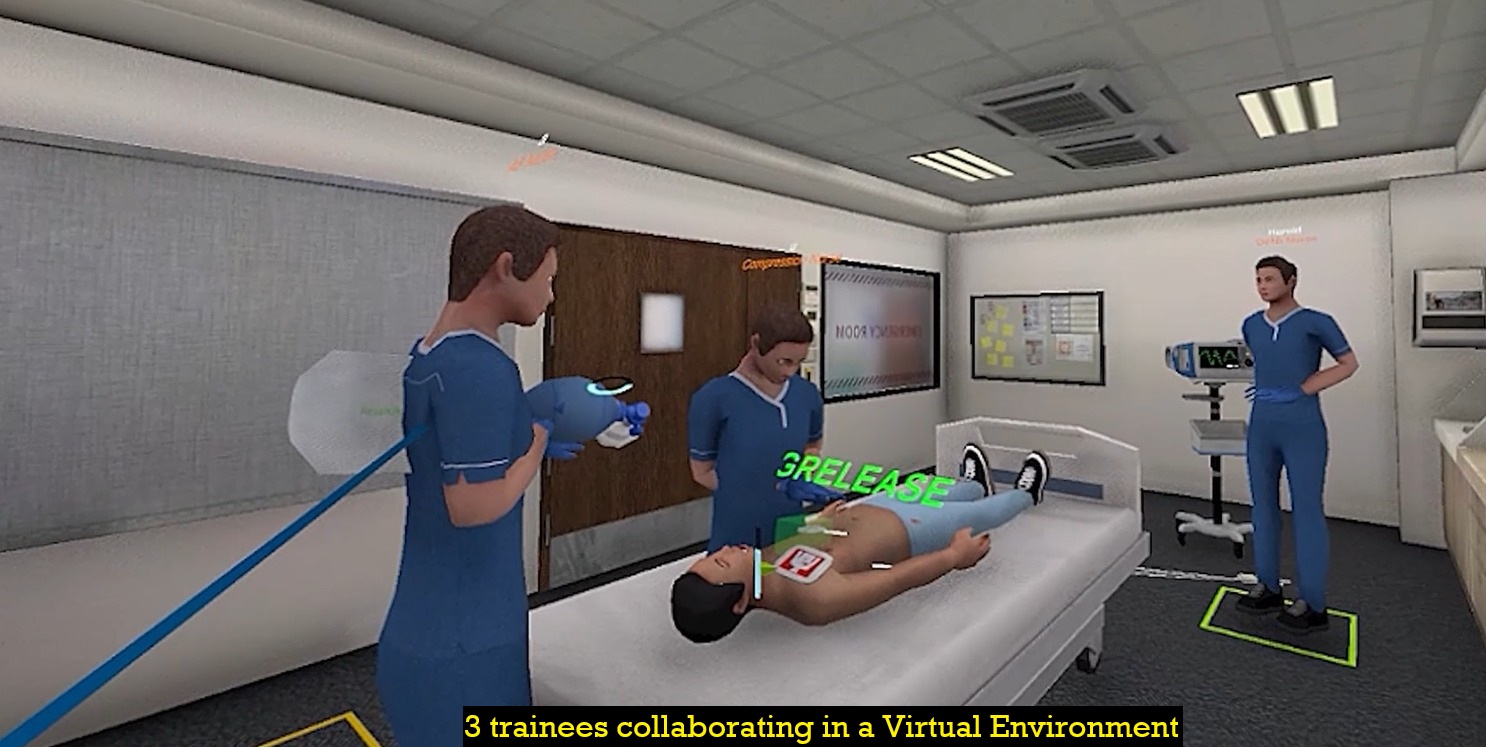
Led by Mr Yuan Peng, Assistant Director (Nursing Innovation), Department of Nursing Administration, IMH, together with IMH’s nursing training team, the project was funded by the CHI-VIRTCHILL FY2025 Extended Reality Innovation Challenge Fund and developed in collaboration with NYP’s School of Design & Media.
The collaboration brought together IMH and NYP staff, alongside 15 Final-Year Project students - seven from the Diploma in Game Development & Technology and eight from the Diploma in Animation, Games & Visual Effects. The students contributed skills in VR development, programming, animation and visual design while gaining the opportunity to apply their learning to a real-world healthcare application.
Outcomes and Impact
Testing at IMH showed promising results. Participants’ average confidence in managing a cardiac emergency rose from 3.17 out of 5 before the training to 4.27 out of 5 afterwards.
Improvements were also observed in areas such as interpreting heart readings, preparing a defibrillator, timing chest compressions and coordinating team roles. Participants found the experience immersive and relevant to clinical practice, with the multiplayer format helping them practise communication and teamwork.
Feedback from the testing will also guide further improvements to the prototype, particularly around making the VR controls, navigation and equipment interaction more intuitive for first-time users.
The impact has extended beyond the project itself. Two participating NYP students subsequently took up internships with IMH, while the prototype was showcased at CHI Innovate 2026 to the wider healthcare community.
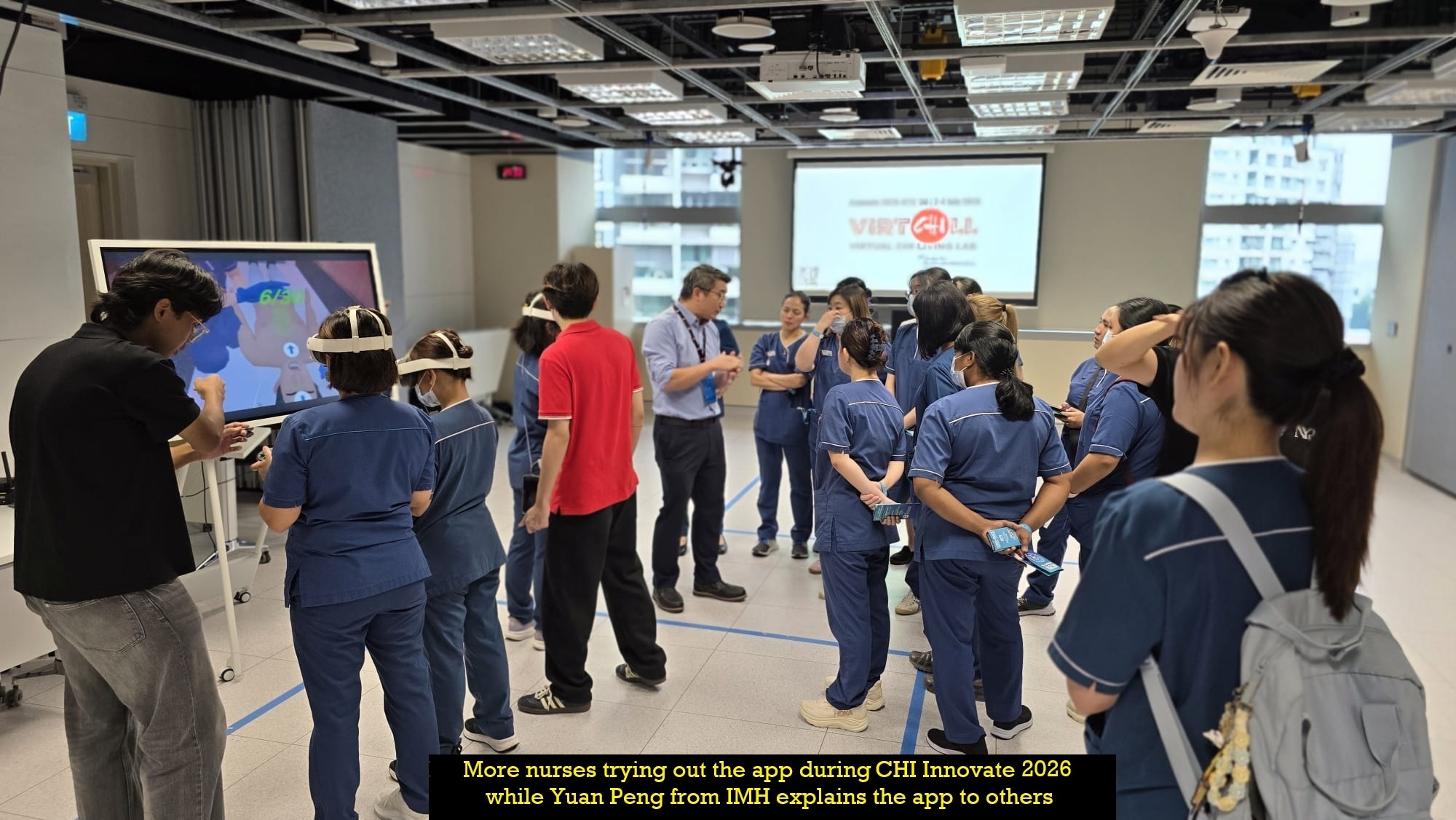
The collaboration has also created opportunities for further applications of immersive technology in healthcare training. NYP’s School of Design & Media is developing another VR training simulator with Tan Tock Seng Hospital and exploring other potential projects in the sector.
For IMH, the next step could see the prototype further developed and tested on a larger scale, with the potential to support other emergency scenarios and eventually benefit healthcare institutions beyond IMH.
Mr Yuan Peng, Assistant Director (Nursing Innovation), Department of Nursing Administration, Institute of Mental Health said:
"From IMH's perspective, this collaboration has successfully demonstrated the feasibility and value of VR technology as a training solution for emergency response education. More importantly, it has laid a strong foundation for future innovation in simulation-based learning. We see considerable potential for the current prototype to be further enhanced and matured into a comprehensive product and sustainable training solution that can benefit not only IMH but potentially other healthcare institutions as well."
More from our Industry Projects

From Campus to the Community: NYP’s Heartfelt Collaboration with Serangoon Moral Family Service Centre (SMFSC)
21 students from the Diploma of Social Work partnered with the Service Centre to organise "Nostalgia Night: A Trip Back to the Past" for senior residents.
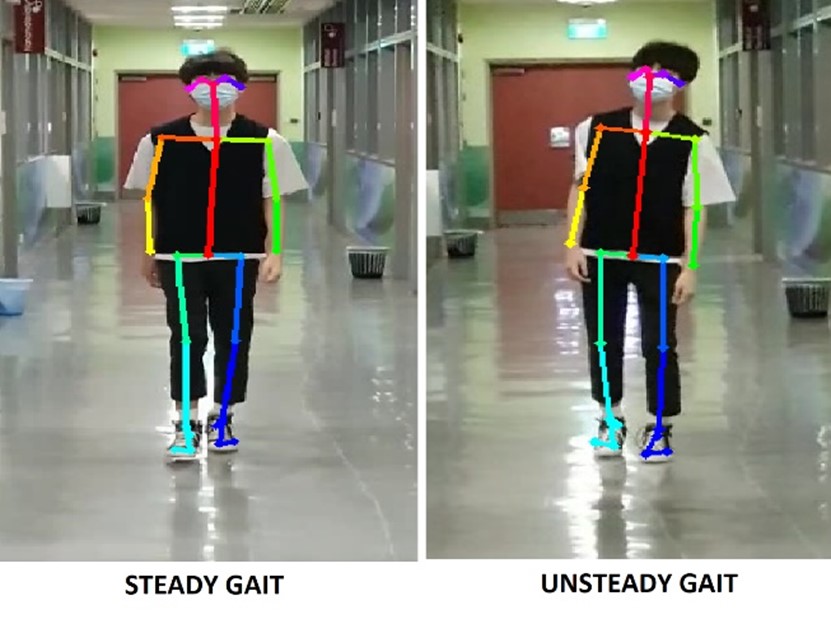
Development & Training of an AI Application to Detect Unsteady Gaits
Singapore General Hospital (SGH) and Nanyang Polytechnic’s School of Engineering have collaborated to develop an innovative AI-powered gait analysis system for the hospital’s emergency department.

Uniting Art, Design, and Care in Dementia-Inclusive Gardens
Apex Harmony Lodge (AHL), Singapore’s first purpose-built dementia nursing home, partnered with NYP to enhance its garden, creating a more engaging and therapeutic environment that fosters meaningful experiences for residents living with dementia.